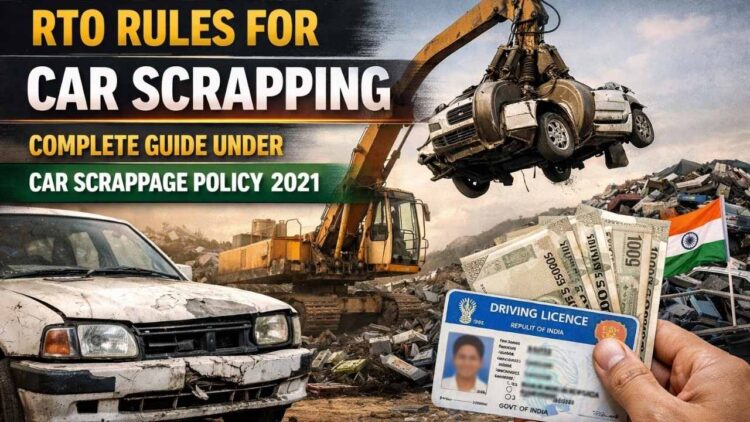
The RTO rules for car scrapping in India come under the Car Scrappage Policy 2021, which was introduced by the Ministry of Road Transport and Highways with the aim of reducing the number of old, unfit, and highly polluting vehicles plying on the public roads and promoting eco-friendly automobiles.
If your car is very old, unfit, or not able to pass the fitness test, then in this situation you will have to get it scrapped, as you cannot use it on the public road. Here, we have discussed everything you need to know about the rules. Make sure to read the article completely so that you do not miss any important point.
RTO rules for car scrapping
Before delving into the RTO rules regarding car scrapping, it’s important to understand which vehicles qualify for scrap. We’ve listed below details regarding when private and commercial cars are eligible for scrap.
- If a private car is 15 years old, then its fitness test has to be done, and if a fitness certificate is obtained, then in this situation it gets re-registration for 5 years, and when 20 years pass, then in that situation it becomes eligible for scrap. If you have a car for personal use and its registration is more than 20 years old, then you will have to get it scrapped because you cannot use it on public roads.
- Commercial vehicles that are 15 years old are eligible for scrapping because, generally, vehicles for commercial use are not fit for use after 15 years. If you have a car that is used commercially and its registration has passed 15 years, then you will definitely have to scrap it because it is not fit to run on public roads.
The state-wise rules regarding scrapping are slightly different; for example, in Delhi, petrol-powered private cars have to be scrapped only after they turn 15 years old, and for diesel-powered cars, scrapping becomes eligible only after they turn 10 years old.
One more thing you have to keep in mind regarding car scrapping is that you should get it done only at a Registered Vehicle Scrapping Facility (RVSF); otherwise, you won’t be able to avail the benefits of the Car Scrappage Policy 2021.
What are the RTO rules for car scrapping?
If the car you have is eligible for scrap, then you can understand the RTO rules related to it by reading the points given below.
The first thing you need to do is to inform the regional transport office:
- You will have to write a formal letter to the RTO in which your vehicle is registered to get it deregistered with the intention of scrapping your vehicle.
- In the letter you will have to declare all these things: that you do not have any loan pending, no challan pending, and no legal issue with your vehicle.
- You will also have to attach all the required documents with your letter, which include the registration certificate, insurance, PUC certificate, and identity proof.
The second and final step is to reach the Registered Vehicle Scrapping Facility (RVSF) with your own vehicle:
- The RVSF will inspect your car, confirm its eligibility, and then begin the dismantling and recycling process.
- After your vehicle is dismantled, a Certificate of Deposit (CD) will be issued by RVSF, which you will have to submit to the RTO to complete the de-registration process.
What are the incentives and benefits of scrapping a car within the RTO rules?
On scrapping any car under RTO rules, you can get scrap value, which is 4% to 6% of the ex-showroom price of a new car. Apart from this, you can get up to a 25% rebate on road tax depending on which state you belong to.
Some states are giving complete exemption of registration fees on the purchase of new vehicles in favor of scrapping old vehicles.
The manufacturer is also giving a discount on the upgrade of old vehicles, i.e., if you had a Tata Motors car and you scrapped it and are going to buy a new TMS car, then you can get an additional discount.